

NEWS WORTHY
JAMAICA’S MOST FAMOUS RIDDIMS: THE BEATS THAT RAISED A NATION , AND TOOK OVER THE WORLD
By Island Media House Editorial Desk
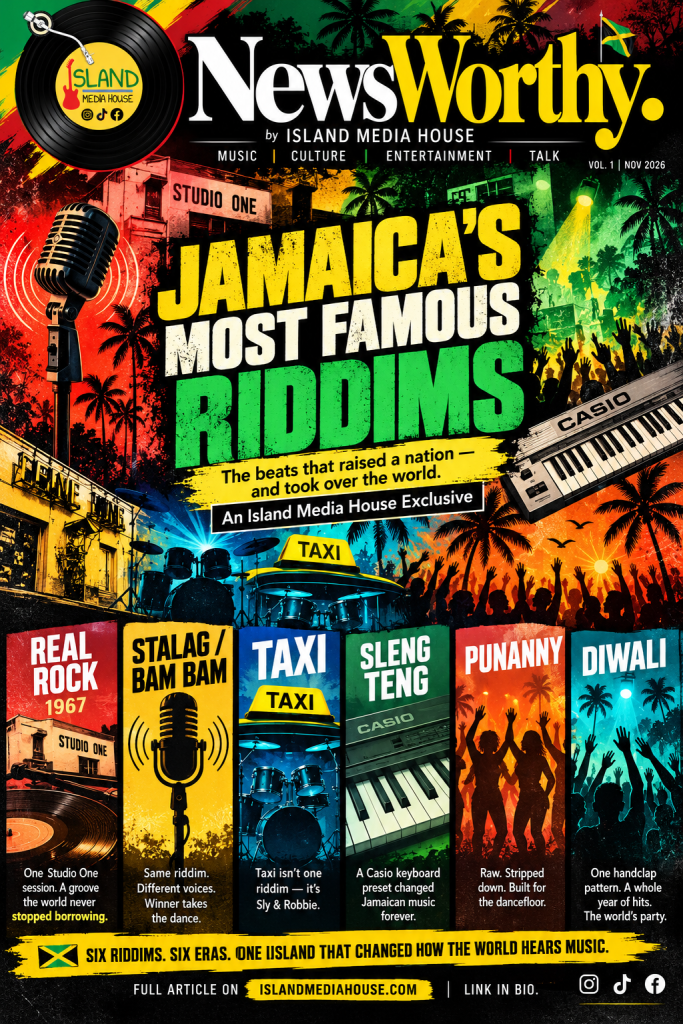
In Jamaica, a riddim is more than a beat. It is one backing track that dozens of artists can voice, each with different lyrics, different energy, and a different story, and the sound system crowd decides which version lives longest. That is why a handful of riddims did not just make hits. They built eras, launched careers, and travelled from Kingston yards to hip-hop, pop, and dancefloors all over the world.
Here are six of the most famous, in the order they changed the game.
1. Real Rock (1967) — Studio One
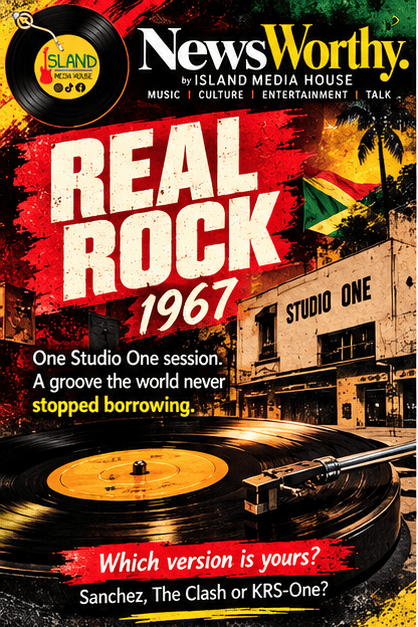
The sound: Sound Dimension, Clement “Coxsone” Dodd’s Studio One house band, recorded “Real Rock” in 1967 (released in 1968). Jackie Mittoo’s three-note Hammond organ figure sits over a hypnotic, rolling bassline.
Hear it in: Augustus Pablo’s “Rockers’ Rock,” Dennis Brown, Junior Murvin, Johnny Osbourne, Sanchez’s “If I Ever Fall In Love Again,” and later, The Clash’s “Armagideon Time” and KRS-One’s “Black Cop.”
Why it matters: In Jamaica, Real Rock became the template — the roots-reggae foundation that sound systems could return to again and again. Worldwide, it is one of the most versioned riddims ever, proof that a Kingston studio band in 1967 could write a groove the whole world would still be borrowing decades later.
2. Stalag / Bam Bam (1973) — Winston Riley
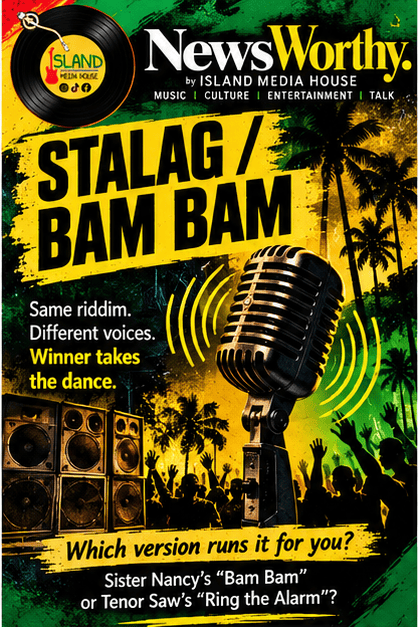
“Stalag 17,” written and performed by Ansell Collins and released on Winston Riley’s Techniques label in 1973 — a tough, strutting bassline built for the dancefloor.
Sister Nancy’s “Bam Bam” (1982), Tenor Saw’s soundclash anthem “Ring the Alarm” (1985), General Echo’s “Arleen,” and countless versions by Barrington Levy, Beres Hammond, Bounty Killer, and Buju Banton.
In Jamaica, Stalag gave deejays a battleground: the same riddim, different voices, winner takes the dance. Worldwide, “Bam Bam” became one of the most sampled reggae songs in history — heard in hip-hop from Kanye West and Jay-Z to Lauryn Hill, and turned Sister Nancy into a global icon of female confidence on the mic.
3. Taxi (late 1970s onward) — Sly & Robbie
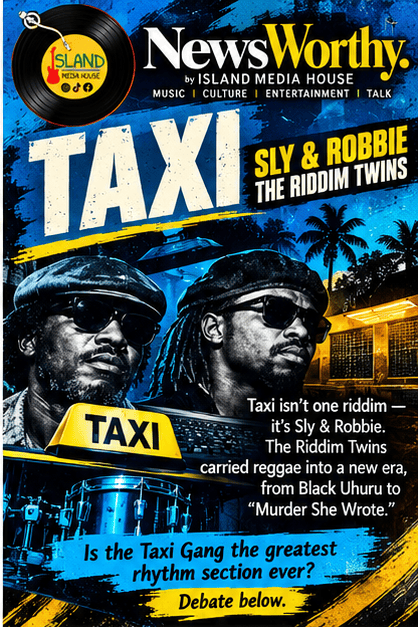
axi is not one single riddim. It is the sound and label of Sly Dunbar and Robbie Shakespeare — the Riddim Twins, also known as the Taxi Gang, and that distinction is exactly why it belongs here.
Their work with Black Uhuru, Dennis Brown (“Sitting and Watching”), Gregory Isaacs, and later, the Sly & Robbie-produced “Murder She Wrote” by Chaka Demus & Pliers (1992).
In Jamaica, the Taxi sound carried reggae from roots into a sharper, more modern dancehall era without losing its soul — tight drums, deep bass, and room for great singers to shine. Worldwide, Sly & Robbie became reggae’s most in-demand rhythm section, backing artists far beyond Jamaica and proving that the people behind the beat could be stars in their own right.
4. Sleng Teng (1985) — King Jammy
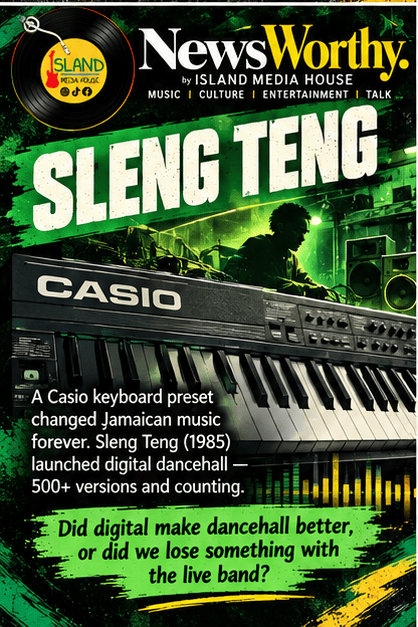
Wayne Smith’s “Under Mi Sleng Teng” (1985), produced by King Jammy. Smith and Noel Davey built it from a preset on a Casiotone MT-40 keyboard — no live band, just a programmed groove.
The original “Under Mi Sleng Teng,” then more than 500 versions on the same riddim, by artists across dancehall and beyond.
In Jamaica, Sleng Teng was an earthquake. It launched digital dancehall (ragga): cheaper to make, faster to cut, and open to any producer with a keyboard instead of a full studio band. Worldwide, it changed how music could be made; the idea that a hit could start on a consumer keyboard in a small Kingston studio and end up sampled in hip-hop, rock, electronica, and video games.
5. Punanny (1986) — King Jammy, Steely & Clevie
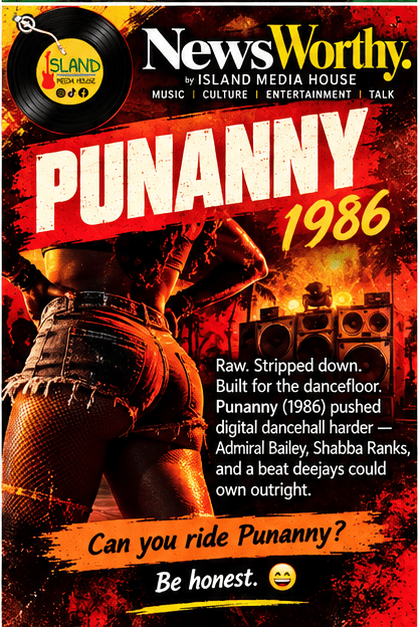
A raw, stripped-down digital shuffle created in 1986 by King Jammy with Steely & Clevie, named for Admiral Bailey’s hit “Punanny.”
Admiral Bailey’s “Punanny” and its radio-friendly rewrite “Healthy Body” — plus Shabba Ranks’ “Needle Eye Pum Pum,” and later relics voiced by Lady Saw and many more.
In Jamaica, Punanny pushed digital dancehall harder and bolder: less polish, more dancefloor pressure, and a beat with enough space for a deejay to own it outright. Worldwide, it helped set the template for hardcore digital dancehall, the sound that carried Shabba Ranks and his generation onto the international stage.
6. Diwali (2002) — Steven “Lenky” Marsden
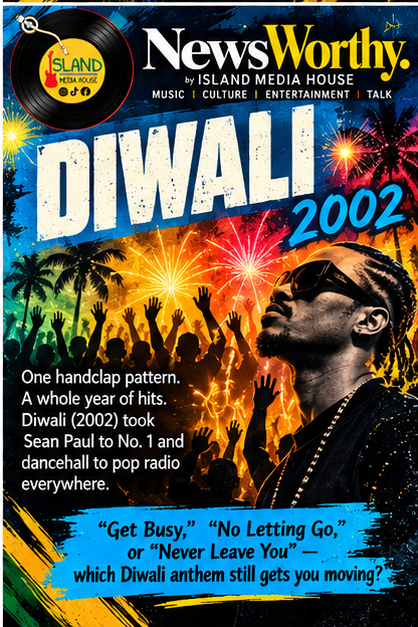
A galloping handclap pattern from producer Steven “Lenky” Marsden — bright, bouncy, and impossible to sit still to.
Sean Paul’s “Get Busy,” Wayne Wonder’s “No Letting Go,” and Lumidee’s “Never Leave You (Uh Oooh, Uh Oooh).”
In Jamaica, Diwali owned 2002 — one riddim, a whole year of hits, and a sound that made the dancefloor feel like one big party. Worldwide, it was dancehall’s pop breakthrough: “Get Busy” topped the Billboard Hot 100 for three weeks, “No Letting Go” and “Never Leave You” followed it into the US Top 10, and the riddim’s claps are still being sampled today.
So, which riddim raised you?
Was it the roots foundation of Real Rock, the soundclash power of Stalag, the Taxi Gang’s polish, the digital shock of Sleng Teng, the raw pressure of Punanny, or the worldwide party of Diwali?
Drop your pick in the comments — and tell us the first song you heard on it.


Leave a Reply